
Applied lesson · NoCode Startup
Jev in marketing operations: triage, context and control
Felipe Luis Salgueiro · Marketing Engineer and GTM Builder · October 7, 2026 · approximately 113 min
Turn CRM and support signals into verifiable work queues: an operational application of the Jev lesson.
Based on the October 7, 2026 class, this guide develops a practical approach to routing requests, prioritizing contacts and reviewing deliveries. These are teaching scenarios, not features already integrated into Cadencia.
The operational problem
Teams receive buying signals, questions and complaints through different channels. Classification can suggest a destination; an explicit policy determines the action.
Automating a queue without measuring incorrect routing can simply spread the problem faster. Start with the operational outcome you need to improve.
What you can apply
- Describe a triage pilot before choosing a tool.
- Build test cases with ambiguity and insufficient information.
- Record the connection between evidence, judgment and action.
- Recognize when a fixed rule is enough for the process.
1. Define the queue contract
Start with a concrete request: route incoming messages to the responsible team. Specify the source, contact identifier, timestamp, message and necessary context. Preserve the original record so routing can be reviewed.
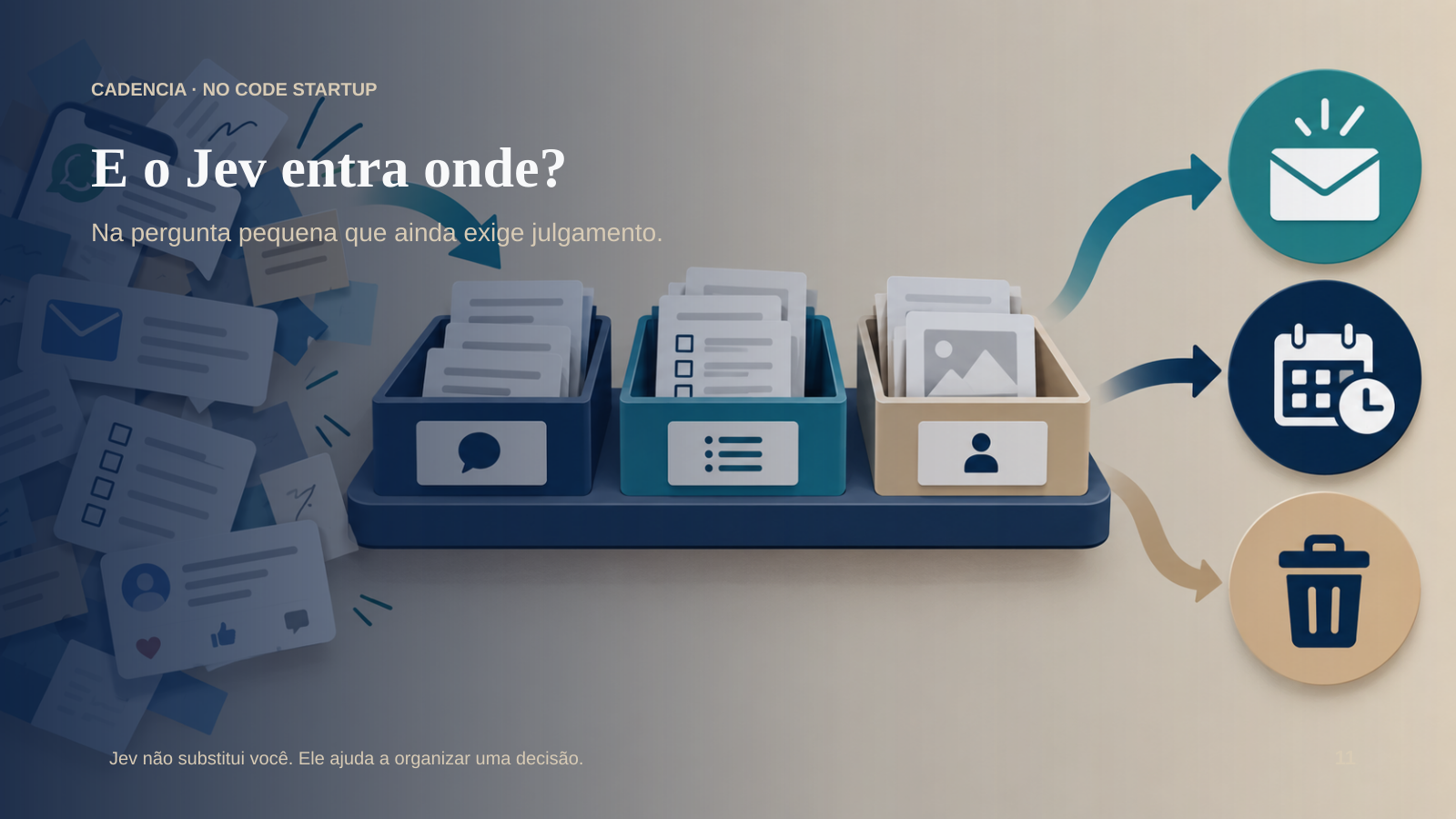
Agree on possible outcomes — for example, sales, support and review — and describe their differences. Review is a useful outcome when information is missing or two categories appear equally plausible.

2. Prepare evidence before evaluation
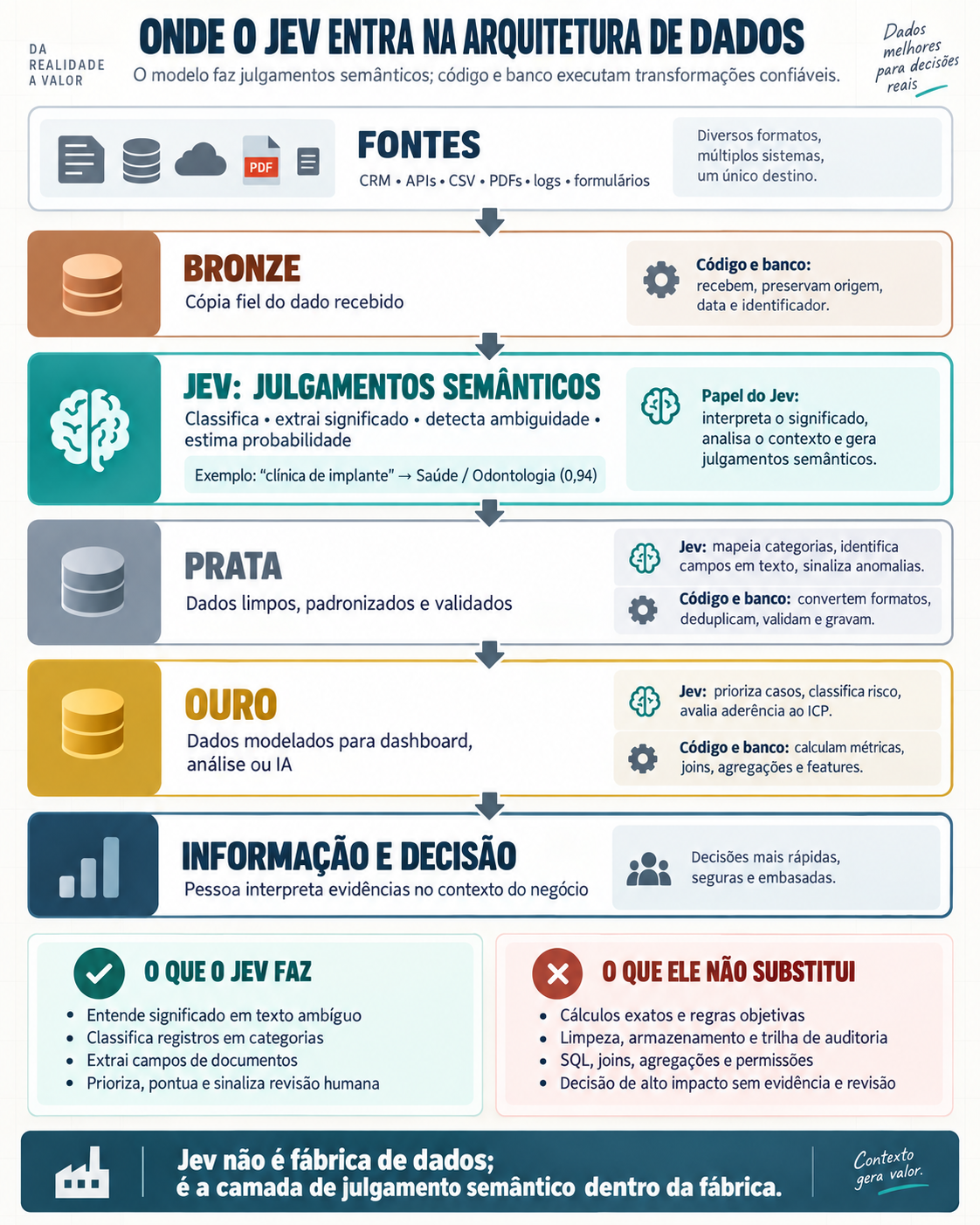
Use Bronze, Silver and Gold to separate received records, organized information and a decision-ready view. The question determines the necessary fields; the model does not need the entire customer history.
Linking duplicate contacts, checking dates and adding amounts belong to the application. Semantic interpretation helps where a literal rule is insufficient, such as distinguishing a new purchase from a complaint about an existing order.
3. Choose the right judgment
Choice compares predefined categories to route a message. Score requires clearly described levels to place a contact on a commercial-readiness scale. Noul returns a probability for a proposition such as “this person requested human assistance”.
These questions are not interchangeable. A score is not a purchase probability, and a high probability does not authorize a campaign. The contract must define what the next step receives and how uncertainty is handled.
4. Do not turn a click into buying intent
The lesson uses contacts who interacted with emails as a starting point. In operations, distinguish curiosity, comparison and an explicit proposal request. A single event can select a sample, but it cannot determine priority on its own.
For practice, describe three contacts: one clicked without replying, another asked about implementation, and a third requested that messages stop. The team must define permitted actions before automating contact. These profiles are teaching examples, not measured outcomes.
5. Control routing outside the model
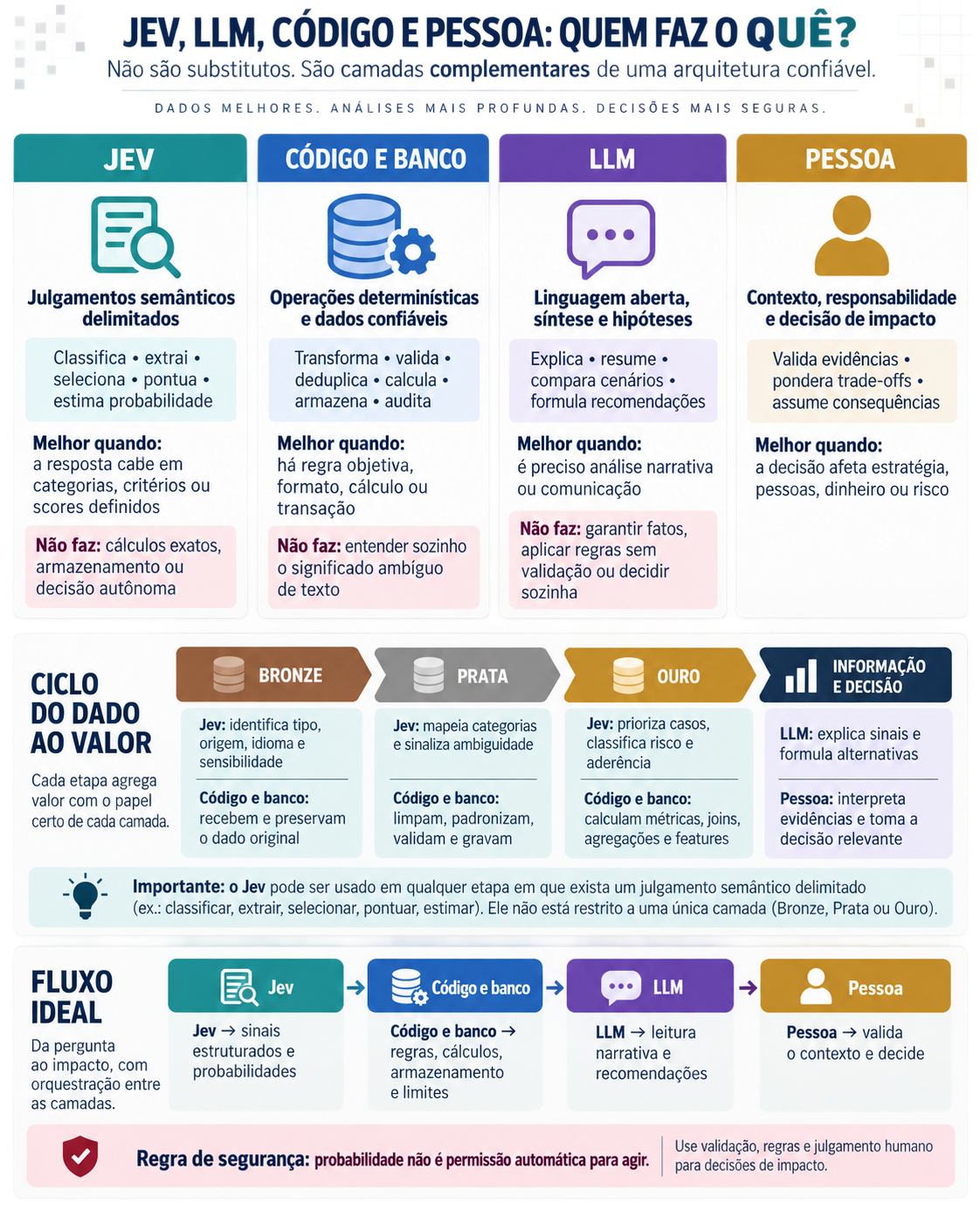
The evaluation feeds a policy: validate the format, check required fields, verify permissions and choose between routing and review. An LLM may prepare context, but it is not a required intermediary between the application and Jev.
Account for service failures, invalid responses and incomplete records. Store the reason for routing and avoid repeating an action already completed. The responsible person still defines limits and handles exceptions.
6. Apply criteria to delivery review
The same approach can compare delivered work with stated requirements. Record the request, evidence and verification for each item. Semantic evaluation can flag gaps; tests and rules check objective requirements.
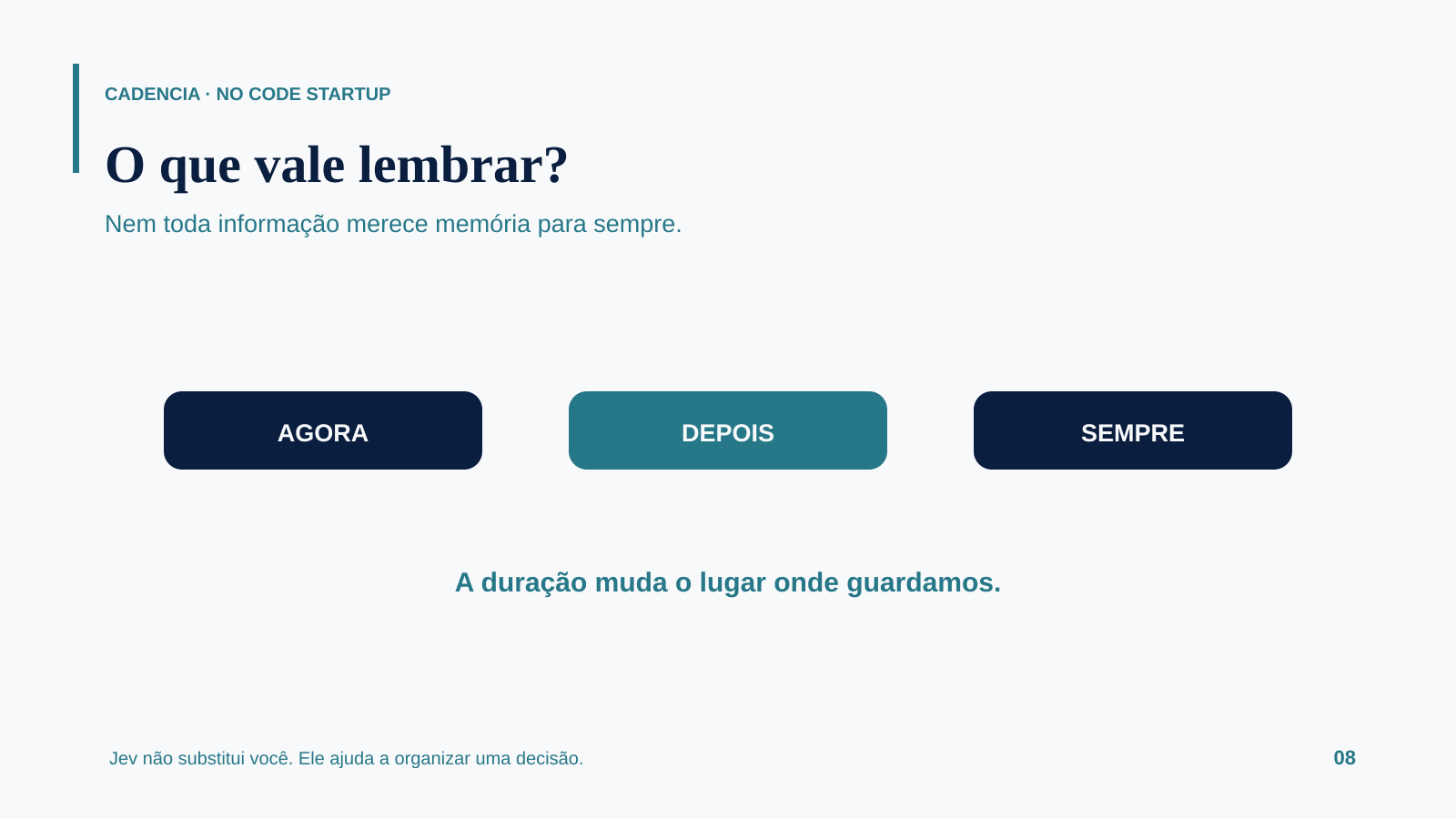
For skill routing, the chosen category must correspond to an available capability. For memory, separating temporary information from durable knowledge improves organization. Neither judgment replaces authorization to execute or approve a delivery.
7. Measure a pilot before expanding
Build a sample of real cases already reviewed by the team, including ambiguous messages and missing data. Compare proposed decisions with human assessments, inspect errors by category and examine the cost of routing a case to the wrong team.
Track time to the correct service, review rates, corrected routing, cost and subsequent outcomes. Acceptance thresholds depend on the process. The lesson does not provide a benchmark guaranteeing these results.
Brief your first pilot
An operational adaptation of the workbook exercise. Define these six items with the team before automation.
Queue
Which recurring request is waiting for a decision?
Evidence
Which records will allow the classification to be checked later?
Categories
Which outcomes are available and when should review be used?
Policy
What can happen for each outcome, under which permissions?
Failure
How will outages, duplicates and incomplete data be handled?
Outcome
Which measure will show whether the pilot improves service or operations?
Operational vocabulary
- Triage
- Routing a request based on context and agreed categories.
- Decision policy
- Rules controlling what can happen after an evaluation.
- Evidence
- Source records that support a classification and allow review.
- Review
- A human decision path for uncertainty or exceptions.
- Pilot
- A limited test with known cases and measured outcomes.
- Confidence
- A summary of the probability distribution, not proof of correctness.